In Alamo Heights, the Foundation Repair Isn't the Red Flag. The Missing Paperwork Is.
September 17, 2026
September 17, 2026
Most buyers touring a 1930s Spanish Colonial Revival on Patterson Avenue or a Craftsman cottage near Cambridge Oval assume two things. First, that a documented foundation repair means the house has a problem. Second, that the home's age and architectural character offer some kind of shield against what gets built next door. Both assumptions run backward. In Alamo Heights, the repair with the engineer's letter attached is the safer purchase, and the century-old house has no legal protection from the bulldozer on the adjacent lot. Understanding why requires looking at what the city's own building code actually demands, and what a 2019 change in state law actually took away.
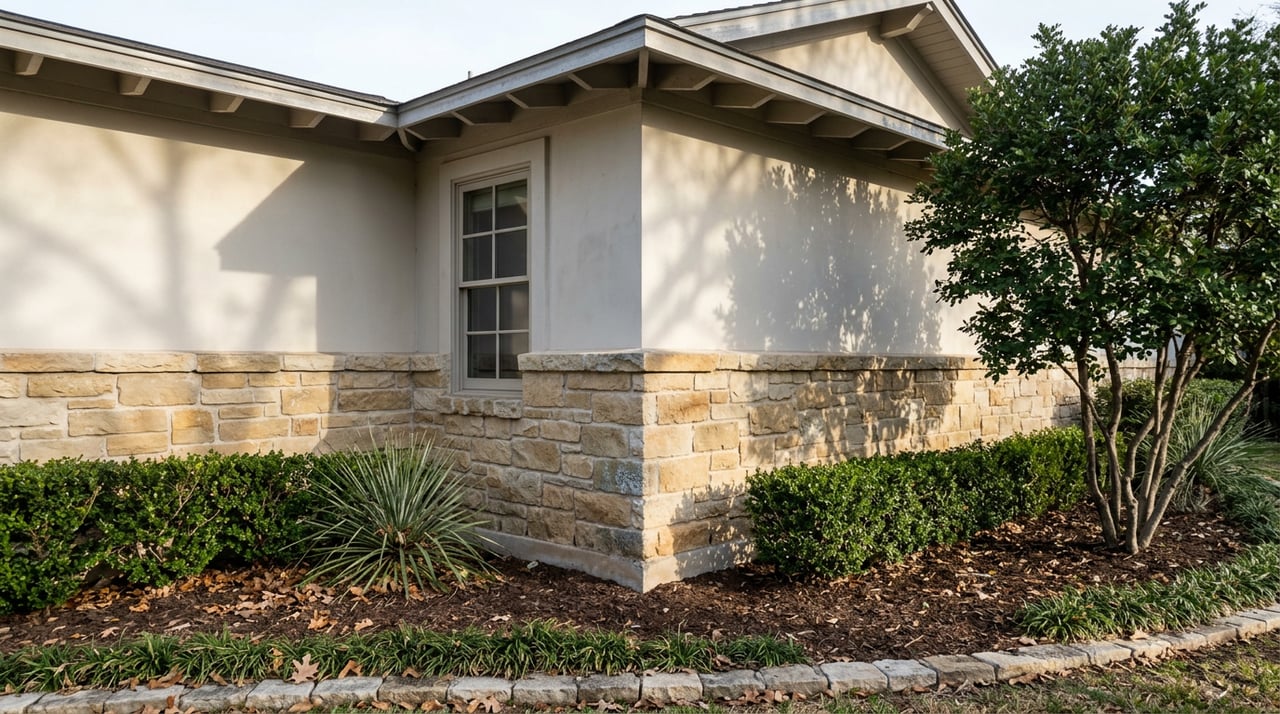
Alamo Heights sits on expansive clay soil that swells when it rains and pulls away from foundations during drought, and its streets are lined with heritage oaks planted before most of the houses were built, trees whose root systems pull moisture unevenly from beneath slabs and piers. Add a housing stock that mostly went up in the 1920s through the 1940s, much of it originally built on pier-and-beam foundations that later got slab additions tacked onto them, and you have a neighborhood where foundation movement is not an anomaly. It is a predictable consequence of soil, trees, and age.
That is exactly why the city's own code treats foundation work as something that has to be engineered, not eyeballed. Under Alamo Heights' Code of Ordinances, any new foundation for a conditioned structure must be designed by a licensed professional engineer, and any foundation repair involving a substantial number of replaced or added piers carries the same requirement. The engineer who designs the repair is also the one who has to inspect it, and that inspection has to be reported back to the city in a signed, sealed letter that becomes part of the permanent building file.
That last detail is the one buyers skip past. A foundation repair on an Alamo Heights property does not just leave you with releveled floors. It leaves a paper trail: a permit record and an engineer's letter sitting in the city's files, verifiable independent of whatever the seller tells you. A repair with no matching permit is the actual warning sign, not the repair itself.
| What you're looking at | What it tells you |
|---|---|
| Permit on file + engineer's inspection letter | Repair was designed and verified to code; ask for the elevation survey and any warranty |
| Visible repair (new piers, patched slab) but no permit found | Work may not have been engineered or inspected; get your own structural opinion before waiving the option period |
| No visible repair, no permit history | Either the house hasn't needed one, or movement hasn't been addressed. Worth a foundation elevation check either way given the soil |
Before you write an offer, or at the latest before your option period runs out, there are three things worth pulling rather than taking on faith:
If a seller can produce all three, you are looking at a documented, code-compliant repair on a home that was built for a climate and soil type it was never going to escape unscathed. If they cannot, that gap is worth more scrutiny than the crack in the stucco that prompted your question in the first place.
Here is the part that surprises people who assume an older, architecturally distinct neighborhood comes with built-in protection: Alamo Heights has no historic district. Not one. The city has an Architectural Review Board, and so does neighboring Terrell Hills, while Olmos Park has no architectural review process at all, which tells you Alamo Heights sits in the middle of the local spectrum rather than at the protective end of it.
Before 2019, that ARB had real leverage over teardowns. City Manager Buddy Kuhn has described the board's earlier authority as having "some teeth" when it came to design and demolition decisions. That changed with Texas House Bill 2439, which restricted municipalities' authority to regulate building materials or limit teardowns. The practical result, according to a San Antonio Report investigation, is that more than 75 houses in Alamo Heights were razed or approved for demolition in the five years leading up to 2023, a pace residents say did not exist before the law changed.
The ARB still functions. Under Chapter 5 of the city's Code of Ordinances, demolition and final design review applications still require the ARB's recommendation before City Council acts on them. But a recommendation is not a veto, and that distinction is the entire story. A 1928 Mediterranean Revival with clay tile and arched openings gets the same review process as a proposal to replace it, and the board's input shapes what City Council sees, not whether the project proceeds.
For comparison, the City of San Antonio, a separate jurisdiction, has designated 32 historic districts that do carry real demolition protection, but even there the ordinance requires support from at least 51 percent of area property owners before a district can be created. Alamo Heights considered adopting a similar process in a 2008 comprehensive plan. As of the most recent reporting, it has not been adopted.
None of this means teardown risk is unchecked. Alamo Heights' zoning code still requires new single-family construction to stay proportional to lot size, an intent written directly into the SF-A and SF-B zoning districts to keep new structures compatible in scale with what has traditionally stood on the street. So a demolition can happen, but whatever replaces the house still has to answer to bulk and scale standards, and to the ARB's design review before it gets approved. That keeps a teardown from becoming a mismatched high-rise next to a one-story cottage. It does not keep the cottage standing.
For a buyer, that reframes two decisions. The first is how you evaluate a foundation history: a documented repair with permit and engineer's letter is evidence the house was maintained to code, not a discount justification. The second is how much weight to put on the character of the surrounding block when you're picturing what the neighborhood looks like in ten years. The trees, the setbacks, and the general proportions will likely hold. The specific houses next to you are not guaranteed to.
Does a documented foundation repair hurt resale value in Alamo Heights? Not on its own. Given the soil and tree canopy throughout the neighborhood, a properly permitted repair with an engineer's letter on file is closer to routine maintenance than a defect. Buyers and their lenders can verify the paperwork, which is usually what matters more than the fact that a repair happened at all.
How do I confirm a repair was actually permitted? Foundation permits and the associated engineer inspection letters are filed with the city's Community Development Services Department and become part of the building record. That record is the independent check on whatever the seller or listing describes.
Does an older or architecturally notable home get any special protection from demolition nearby? Not automatically. Without an adopted historic district, age and architectural character do not carry legal weight against a demolition permit. The ARB reviews and recommends on demolition and design applications, but City Council holds final say, and state law has limited how far a municipality can go in blocking a teardown outright.
If you're weighing an offer on an older Alamo Heights property and want the permit history and engineer documentation pulled before your option period runs out, The Ross Group can help you read the file behind the listing, not just the listing itself.
Stay up to date on the latest real estate trends.




Etiam non quam lacus suspendisse faucibus interdum. Orci ac auctor augue mauris augue neque. Bibendum at varius vel pharetra. Viverra orci sagittis eu volutpat.